
Master’s Degree in Hospitality Management Abroad: Courses, Eligibility, Admission Process & Career Opportunities for Indian Students
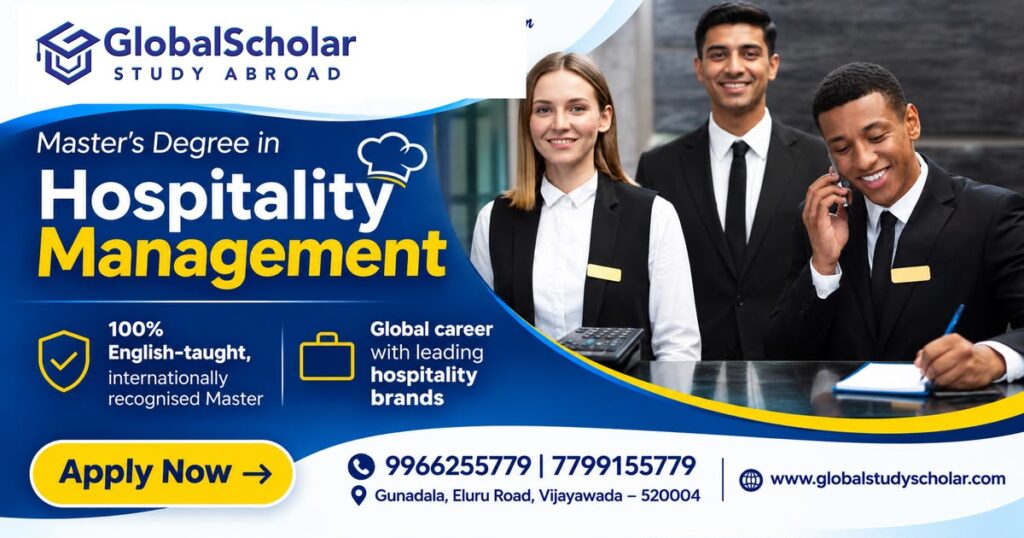
Are you interested in building an international career in the hotel, tourism and hospitality industry? A Master’s Degree in Hospitality Management can help graduates develop advanced management, leadership and operational skills for the global hospitality sector. For Indian students looking to pursue postgraduate education abroad, international hospitality management programmes offer an opportunity to gain academic knowledge, multicultural exposure and an understanding of international service standards. At GLOBALSCHOLAR, we help students explore international postgraduate education opportunities, including Master’s programmes in Hospitality Management. Our advertised programme highlights include: If you are planning to study Hospitality Management abroad, this guide explains the course, eligibility requirements, admission process, career opportunities and important factors to consider before applying. 1. What Is a Master’s Degree in Hospitality Management? A Master’s Degree in Hospitality Management is a postgraduate programme designed for students who want to develop advanced knowledge of hotel administration, tourism operations, hospitality services and business management. The programme focuses on preparing graduates for management and leadership responsibilities across different hospitality-related industries. Depending on the institution and curriculum, students may study: The course combines business management concepts with hospitality industry knowledge. 2. Why Study Hospitality Management Abroad? Studying Hospitality Management abroad can provide students with international academic exposure and opportunities to understand hospitality practices across different markets. International Learning Environment Students can interact with people from different countries and cultural backgrounds, helping them develop communication and interpersonal skills. English-Taught Education The advertised programme highlights 100% English-taught education, which can help students develop professional communication skills for international hospitality environments. Industry-Oriented Knowledge Hospitality management programmes may cover hotel operations, guest relations, business development, service quality and management strategies. International Career Exposure Studying abroad can introduce students to international hospitality standards, business practices and service expectations. Professional Development Students can develop leadership, teamwork, problem-solving, customer service and operational management skills. 3. Master’s in Hospitality Management – Course Highlights Course Details Information Programme Master’s Degree in Hospitality Management Study Level Postgraduate Study Destination International – confirm institution and country Teaching Language English Programme Type Master’s Degree Course Area Hospitality and Tourism Management Career Focus International Hospitality Industry Eligibility Relevant bachelor’s qualification, subject to university requirements Important: The flyer does not identify the university, country, course duration or tuition fee. Contact GLOBALSCHOLAR for the exact programme details and available admission options. 4. Who Should Study a Master’s in Hospitality Management? This programme may be suitable for students who are interested in developing a career in the hospitality and tourism industry. You may consider this course if you have completed: Students from other academic backgrounds may also be considered by certain institutions, depending on their admission policies. 5. Eligibility Requirements for Indian Students Admission requirements vary depending on the university and the selected programme. Generally, applicants may need: Is Work Experience Required? Some Master’s programmes accept fresh graduates, while others may prefer or require relevant professional experience. Students should check the specific university’s admission criteria before applying. 6. English Language Requirements Since the advertised programme is 100% English-taught, students should have sufficient English communication and academic skills. Universities may accept: English-language requirements differ between universities. Students should confirm the accepted tests, minimum scores and any exemption conditions before submitting their applications. 7. What Will You Learn in Hospitality Management? A Master’s in Hospitality Management can cover several important areas of the international hospitality business. Hotel and Resort Management Learn about hotel administration, accommodation operations, guest services and property management. International Tourism Management Understand tourism markets, destination development, travel services and international tourism operations. Food and Beverage Management Explore restaurant operations, food service management, quality standards and business operations. Hospitality Marketing Understand branding, customer engagement, digital marketing and strategies used by hospitality businesses. Human Resource Management Learn about recruitment, employee training, workforce planning and leadership in hospitality organisations. Financial and Revenue Management Develop knowledge of budgeting, cost control, financial planning and revenue optimisation. Strategic Hospitality Management Understand business planning, operational performance, leadership and decision-making. Note: These are common hospitality management subject areas. The actual modules depend on the university’s approved curriculum. 8. Career Opportunities After a Master’s in Hospitality Management Hospitality is an international industry covering hotels, resorts, restaurants, tourism businesses, event organisations and other service-related companies. After completing a relevant qualification, graduates may explore career opportunities such as: Hotel Manager Oversee hotel operations, guest services, staff management and business performance. Front Office Manager Manage reception operations, reservations, guest relations and front office teams. Food and Beverage Manager Supervise restaurant and food service operations, staff performance and service quality. Resort Operations Manager Coordinate accommodation, guest experience and operational activities at resorts. Hospitality Marketing Manager Develop marketing strategies, branding campaigns and customer acquisition initiatives. Revenue Manager Work on pricing strategies, room revenue, occupancy planning and business performance. Event and Conference Manager Coordinate conferences, corporate events, meetings and hospitality services. Guest Relations Manager Focus on customer satisfaction, guest communication and service quality. Tourism Operations Manager Coordinate tourism services, travel operations and destination-related activities. Career note: These are possible career pathways, not guaranteed job placements. Employment opportunities depend on qualifications, experience, local labour-market conditions and work authorisation. 9. International Hospitality Brands and Career Exposure The international hospitality industry includes hotels, resorts, restaurants and tourism businesses operating across multiple countries. Students interested in this sector may explore career opportunities with internationally recognised hospitality groups, including: These are examples of international hospitality companies, not confirmed recruitment partners of the advertised programme. Employment requirements differ between organisations and locations. 10. Study Hospitality Management Abroad – Admission Process Applying for an international Master’s programme involves several important stages. Step 1: Initial Counselling Discuss your academic background, professional experience and future career goals with GLOBALSCHOLAR. Step 2: Profile Assessment Our team reviews your previous qualifications and helps identify suitable postgraduate programme options. Step 3: University and Course Selection Explore available institutions, course modules, tuition fees, duration, eligibility and admission requirements. Step 4: Document Preparation Prepare your academic certificates, transcripts, passport, CV and other documents requested by the university. Step 5: Application Submission Submit your application to the selected institution